On this page
A tenant in WA can have an EV charger installed, but only with the landlord's permission, asked for in writing. Agree up front who pays, who owns the charger and what happens when the lease ends. The install itself is the same as in any other home.
For tenants: ask on Form 27 and give the landlord 28 days to reply. For landlords: a charger can be locked to one driver, and its cost may be claimable on an income-producing property. Check that with your accountant.
What the WA Rental Rules Say
WA tenants can ask to make small changes to a rental, called minor modifications. Consumer Protection's guide to making changes to a rental home gives examples like picture hooks, curtains and LED bulbs that fit the existing light fittings. The tenant asks on Form 26, and the landlord has 14 days to respond.
An EV wall charger isn't on that list. It needs its own circuit wired from the switchboard by a licensed electrician.
For any other change, Consumer Protection says the tenant must ask the landlord for permission. Its examples include installing an air conditioner, a dishwasher or a pet door.
How to Ask Your Landlord
Use Form 27, the request to make a major modification, and give the landlord 28 days to reply. Include these in your request:
- A written quote from a licensed electrical contractor
- Where the charger will go and how the cable will run from the switchboard
- Any switchboard work the quote includes
- Who pays for the charger and the install
- Whether the charger stays or comes out when you move, and who pays for that
Get the landlord's answer in writing before any work starts, and keep it with your lease.
Charging While You Wait for an Answer
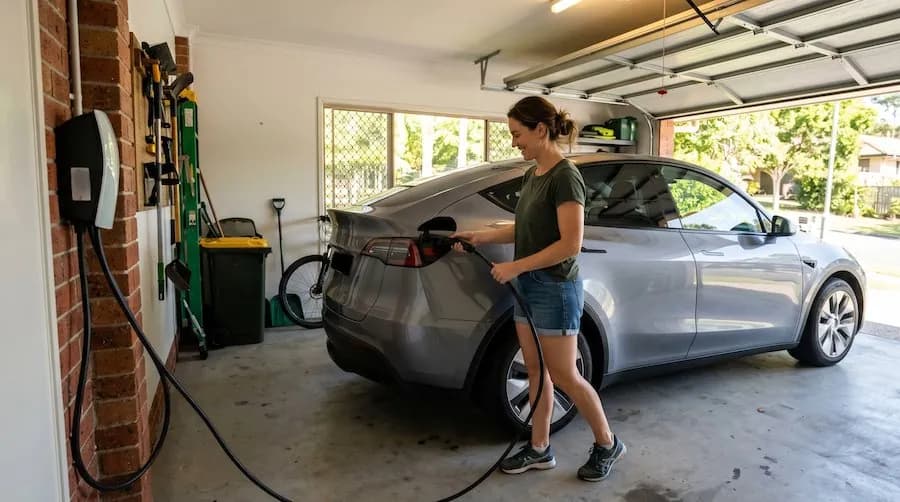
You can charge an EV from a standard power point while you wait, using a portable charging cable.
The WA Government's guide to preparing for your new EV puts a standard 10-amp socket at about 2.2kW. That adds 10 to 15km of range an hour. A 7kW wall charger adds about 30 to 40km an hour.
A power point suits short daily trips, when the car has long periods to sit and charge. Our post on portable EV chargers covers when that works and when it falls short.
What Landlords Should Know
A charger is wired into the home, so it follows the same WA rules as any other electrical work. A licensed electrical contractor does the work, and they give an electrical safety certificate to the person who ordered it within 28 days. If you pay for the install, ask for the certificate in your name.
A few points worth weighing up:
- Access. Many chargers can be locked through an app or with RFID tags, small cards that switch the charger on for the person holding one.
- Tax. When the charger is for an income-producing property, it is tax-deductible in most cases. Check with your accountant, and we can provide the documents and cost breakdowns they need.
- The next tenant. A charger that can share power with a second charger later saves pulling it out if a future tenant has two EVs.
- Warranty. Our home installs come with a 2-year parts and labour warranty, so a fault in that time is ours to fix.
Own several rentals, or a block of units? We work with developers and commercial landlords on commercial EV charger installation. The chargers share the building's power, and each driver's charging can be billed to them.
Apartments and Strata
In an apartment, the car bay can run off the building's shared power. So the charger needs the strata's approval and a way to bill the driver for that power. Ask your strata manager what your building needs.
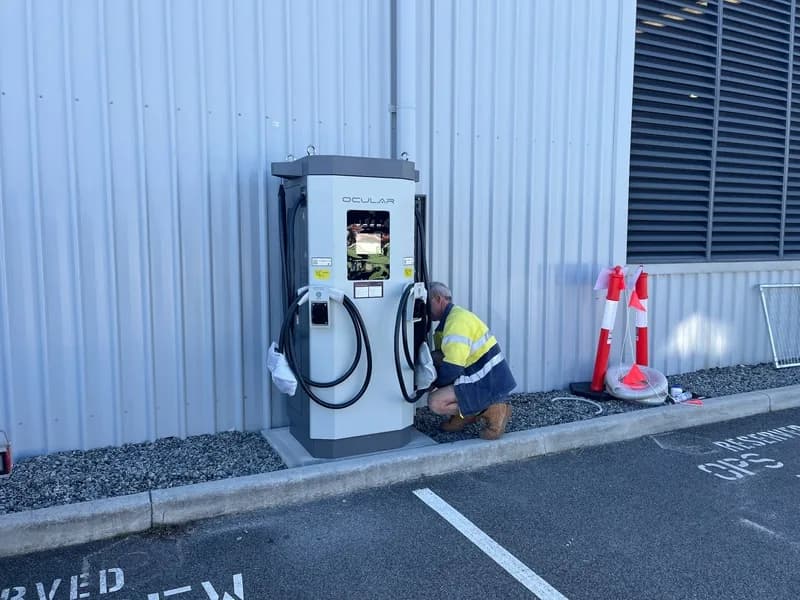
At the Revue Apartments in Dalkeith, we installed a 7kW Ocular charger in a resident's allocated bay. It needed strata approval and had to work with the building's existing load management. The billing works like this:
- The resident taps her own RFID card to start the charger, so only she can use it.
- The power comes from the building's common supply.
- Exploren, the charging software, records each charge and bills her nominated payment method.
- The money goes straight to the strata company's trust account.
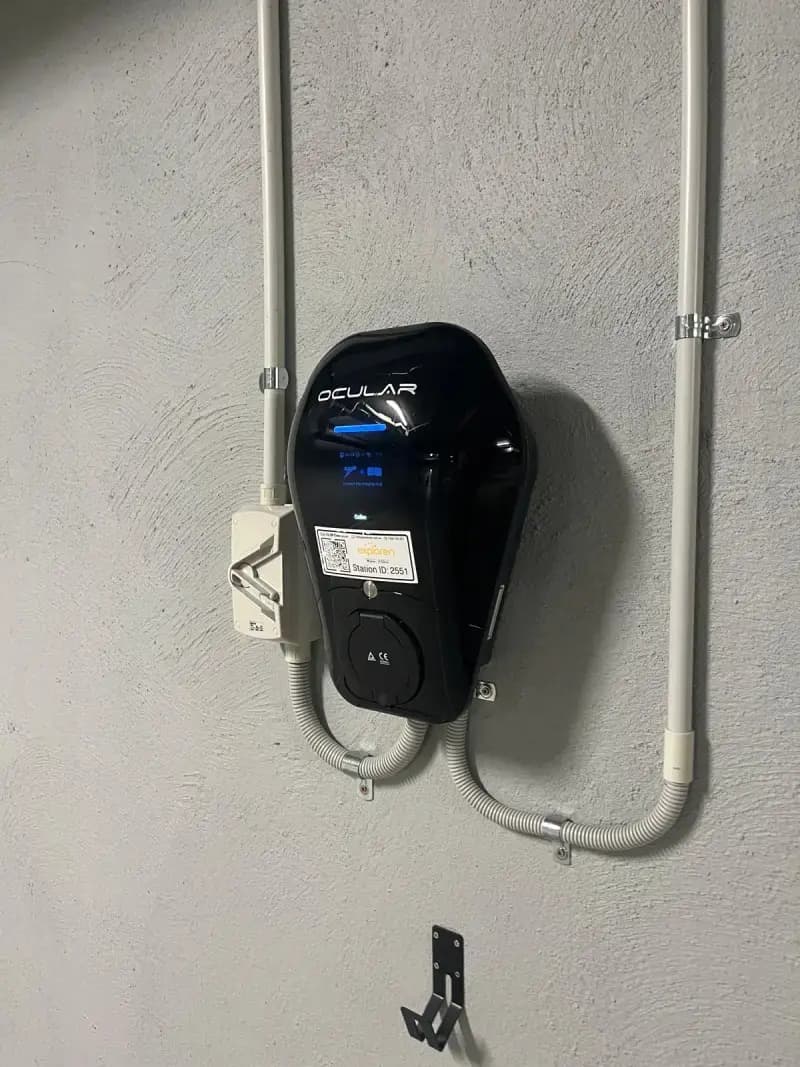 The resident's charger at the Revue Apartments, Dalkeith.
The job was quoted within days and installed in about three weeks. Because each driver pays for their own charging, the same set-up can work for a resident who rents.
Getting a Quote
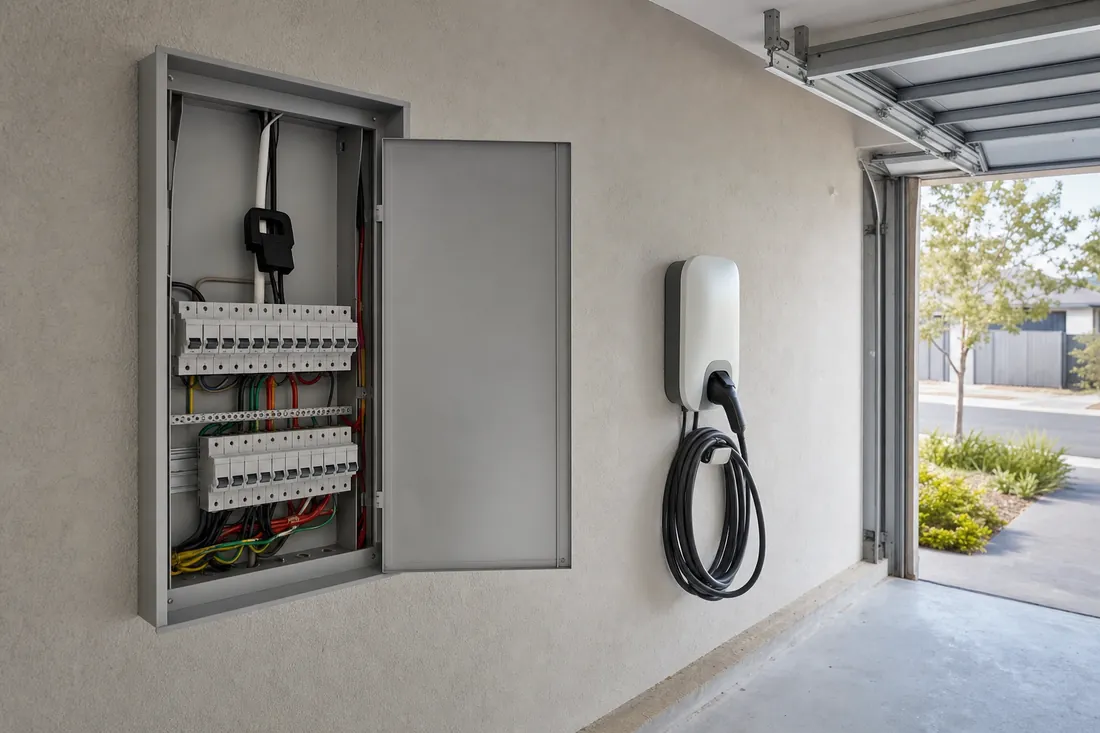
Whether you rent or own the property, the quote starts the same way. Send us a photo of the switchboard, and one showing the switchboard and where you'd like the charger. We'll tell you what the install involves.
Tenants can pass the quote straight to the landlord with the Form 27 request. See our home EV charger installation page for packages, and our post on WA EV charger installation rules for the rules behind the quote.
Common Questions
Can a tenant install an EV charger in WA?
Yes, with the landlord's permission. A wall charger isn't a minor modification, so the tenant asks on Form 27 and gives the landlord 28 days to reply. A licensed electrician then does the install.
Who pays for an EV charger in a rental?
Whoever the tenant and landlord agree on. Put it in writing before work starts, along with who owns the charger and whether it stays when the lease ends.
Can a landlord claim an EV charger on tax?
For an income-producing property, it is tax-deductible in most cases. Confirm with your accountant. We can provide the documents and cost breakdowns they ask for.
How do apartment residents pay for the power they use?
Charging software can record each charge and bill the driver. At our Dalkeith apartment job, Exploren bills the resident's payment method and sends the money to the strata company's trust account.