On this page
Pre-wiring a new home for an EV charger means running the charger's cable from the switchboard to where you'll park. It also means leaving space in the switchboard for its circuit.
Settle where the car goes, what power supply the home gets and how many EVs you might own. Then hand that to your builder's electrician before the plans are locked in.
Worth asking: the WA Government's EV guide suggests asking what to upgrade now for a second EV, to save on costs later.
What Pre-Wiring Includes
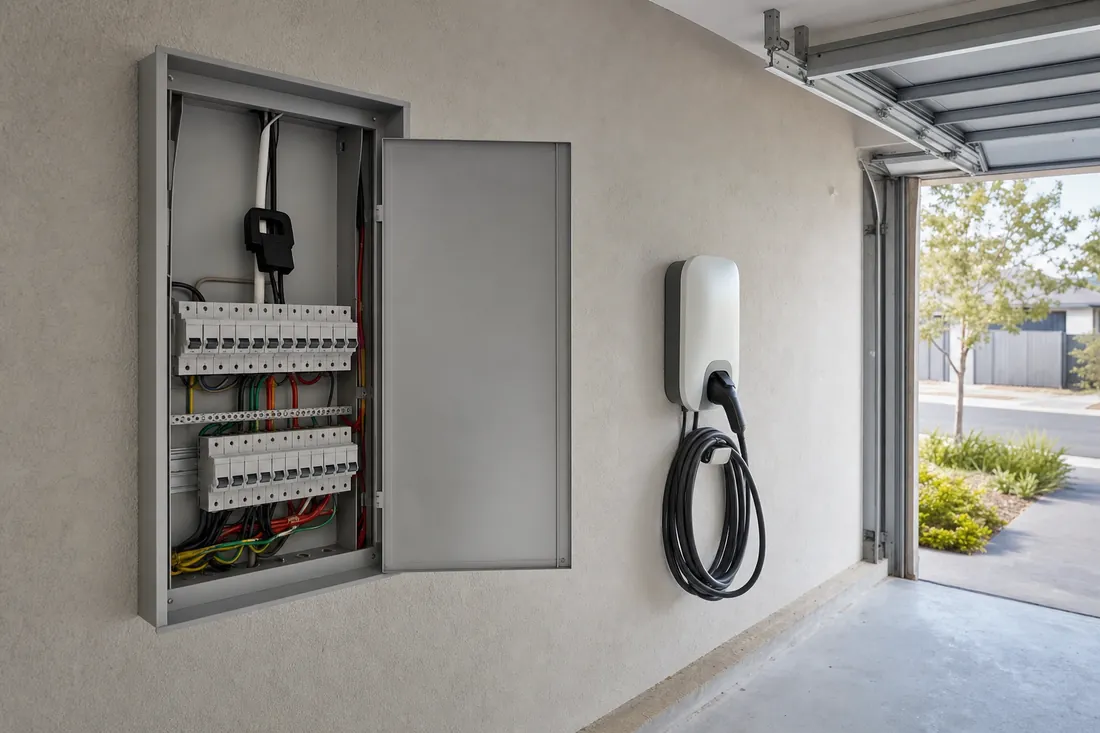
A wall charger needs its own dedicated circuit, a power line from the switchboard that runs nothing else. Pre-wiring puts the pieces of that circuit in place during the build:
- A cable from the switchboard to the charger spot, sized for the charger you plan to fit
- Conduit, the plastic pipe a cable runs through, so the cable is protected and can be pulled through later
- Space in the switchboard for the charger's circuit protection, the breaker that cuts power if something goes wrong
- A main switch that is already a circuit breaker
- A mounting spot that suits indoor or outdoor use, depending on where you park
The charger itself can go in when you get the car. Our post on what goes into a home charger install covers the rest of the job.
Choose the Charger Spot Around How You Park
Where the charger goes affects how easy it is to use every day. The WA Government's guide to preparing for your new EV lists questions to ask your electrician, including:
- Where is the best location to install a charger?
- How far from the switchboard can the charger be installed?
- Will the charging cable be long enough to reach my car's charge port?
- Do I want the cable fixed to the charger, or a socket so I can take my own cable to public chargers?
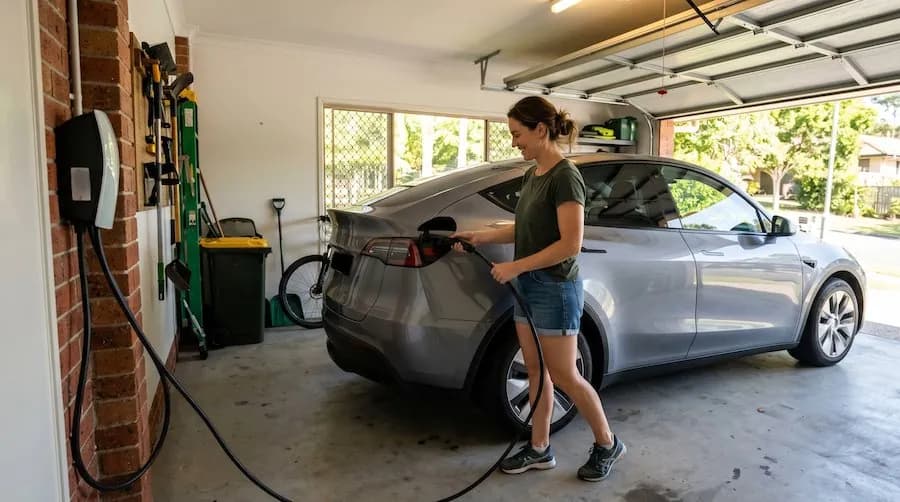
Think about which side of the garage each car will sit and where its charge port is. A charger on the wrong wall, or with a cable that only just reaches, makes charging awkward every day.
Single-Phase or Three-Phase Power
Single-phase homes have one supply line from the street, and three-phase homes have three. A new build is a good time to ask which one the home will get, and what size charger that allows.
On Western Power's network, a standard connection is 63 amps on single-phase power or 32 amps on each line of three-phase. Western Power permits a 7kW single-phase charger on either.
A 7kW charger on single-phase power adds about 30 to 40km of range an hour. A 22kW charger on three-phase adds about 100 to 120km an hour, but only if your car can charge at 22kW.
Ask for a Circuit Breaker Main Switch
Western Power also requires the main switch to be a circuit breaker for EV charging connections. That's the switch that turns off power to the whole house. Ask for that on the plans, so the charger install later doesn't include changing it.
If You Want More Than One Charger
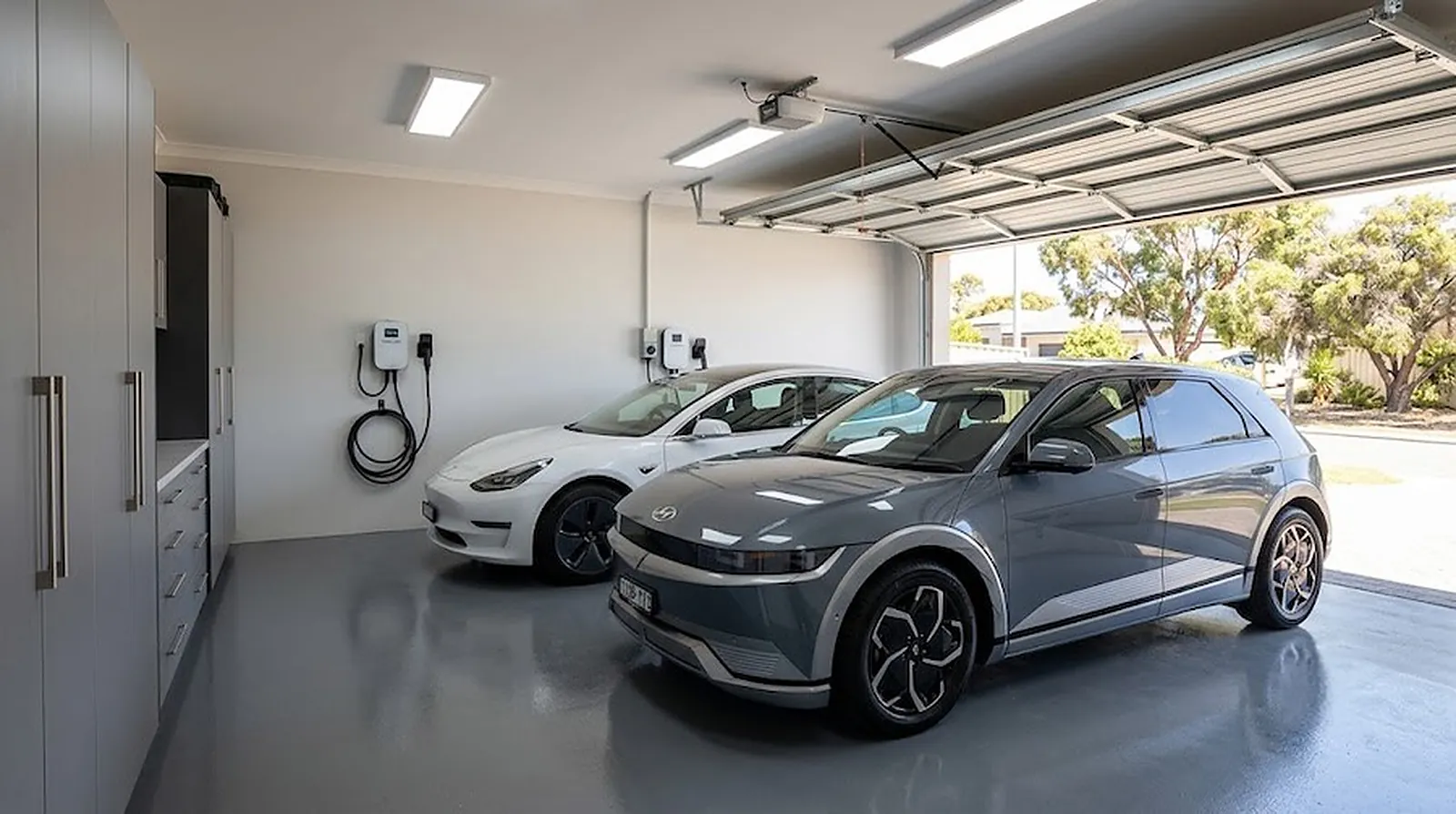
Two EVs charging while the air-con, oven and pool pump run can push the home past its connection.
If the home's total load could go past its connection, Western Power allows a bigger connection. The other option is a smart charger that limits what the home draws from the grid. Our post on charging more than one EV at home covers how two chargers share the power.
Plan for Solar and a Battery Too
If solar or a home battery is on the list, plan for it at the same time. We've seen too many people choose the cheapest install, then have it removed a year later. They'd upgraded the EV, added solar or bought a second car.
A solar-aware charger measures your solar and sends the spare into the car. If the panels come later, a charger that is ready to work with them saves replacing it. Our solar EV charging page explains the options.
What the Building Code Says
The National Construction Code has an EV charging rule, clause J9D4, but it covers car parks of apartment and commercial buildings, not standalone houses. WA adopted these energy efficiency rules from 1 May 2025.
For an apartment building's car park, the code calls for distribution boards for EV charging on each storey. A distribution board is a smaller switchboard that feeds part of a building. Every car space has to be sized to take a 7kW (32 amp) charger later.
For a house, pre-wiring is your choice. Ask for it in writing as part of the electrical plan.
Building Several Homes or Units?
Developers and builders planning several homes, units or a shared car park face the same questions at a bigger scale. Plan the site's capacity and conduit early. That keeps options open for more chargers as more residents buy EVs.
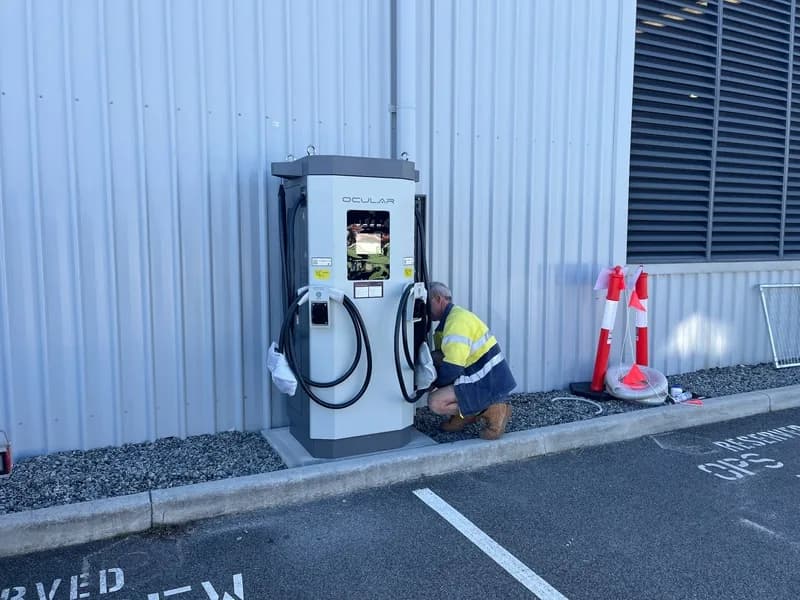
We plan these with developers and commercial landlords through our commercial EV charger installation service. It starts with a site visit to check power availability and how many chargers the site needs.
A Pre-Wiring Checklist for Your Builder
- Mark where each car will park and where the charger will mount.
- Confirm whether the home is getting single-phase or three-phase power.
- Ask for a cable, in conduit, from the switchboard to each charger spot, sized for the charger you plan to fit.
- Leave space in the switchboard for each charger's circuit.
- Make sure the main switch is a circuit breaker.
- Note any solar or battery plans on the electrical drawings.
- Get it all written into the electrical plan.
When the car arrives, we fit the charger, set it up and test it. See our home EV charger installation packages, or talk to us about your plans.
Common Questions
Do new homes in WA have to be EV ready?
The building code's EV charging rule, clause J9D4, applies to car parks of apartment and commercial buildings, not standalone houses. For a house, pre-wiring is something you ask for.
Should I get three-phase power in a new build?
It depends on your car and how far you drive. Western Power permits a 7kW single-phase charger on a standard single-phase or three-phase connection. Three-phase allows a 22kW charger, if your car can take it.
Can I install the charger later if I pre-wire now?
Yes. Pre-wiring gets the cable and switchboard space ready, and the charger can be fitted when you get the car.
Who should do the pre-wiring?
A licensed electrician, usually your builder's. Give them the charger you plan to fit and where it will go, so the cable and switchboard space suit it.