
Three-Phase EV Charger Installation in Perth
A three-phase charger uses all three lines of power into your Perth home, so a car built for it charges faster. We check your home's power and your car before we quote.
 5.0Google rating
Faster Home Charging on Three-Phase Power
Some Perth homes have three-phase power, which means three lines of power come in from the street instead of one. A three-phase charger uses all three, so a car built for it can charge at about 11kW, or up to 22kW. A kW, or kilowatt, is how fast the power flows.
Whether that helps you comes down to what your car can take, what your supply can carry, and the room in your switchboard. Your switchboard is the box of switches that feeds every circuit in the home. We check all three before we quote, and tell you if a 7kW single-phase charger would suit you just as well.
If a more expensive feature is unlikely to provide a real benefit at your property, we'll explain that before you spend the money.
Get Your Three-Phase Charger Quote
How We Install Your Three-Phase EV Charger
The same six steps as every home install we do, with your supply, switchboard and car checked before we quote.
Enquiry
You reach out by phone, form, or referral; we'll have a quick chat to understand what you need and how we can help.
Project Details
We'll ask for a few photos and details:
- Your switchboard
- The proposed installation location
- Any solar or battery setup
- EV make/model
This helps us give you accurate advice from the start.
Consultation
We'll talk through your needs, including:
- Current EV
- Plans to add more EVs
- Solar integration
- Load capacity of your home
We'll also explain what options make sense, and which don't.
Quote
You'll get a proper quote, not just a price. It includes:
- Product recommendation (with options)
- Full install scope
- Any upgrades needed (e.g. switchboard work)
- Optional extras like app control or solar syncing
Installation
The installation day usually takes half to three-quarters of a day. We'll:
- Turn up on time
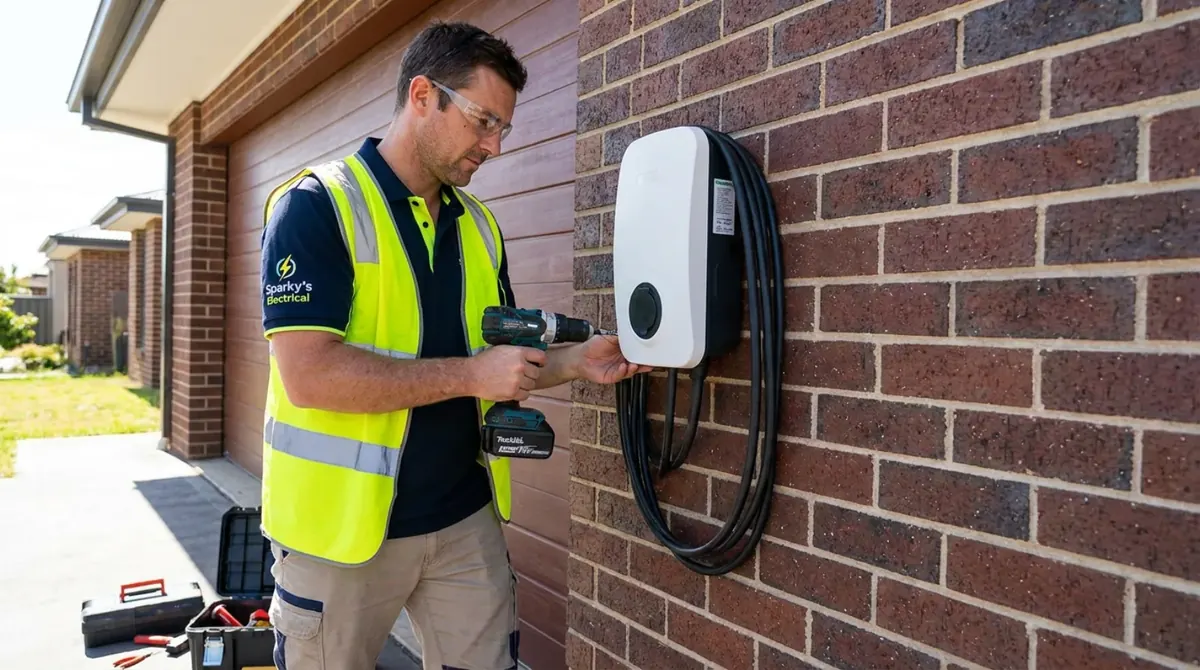
- Work cleanly and safely
- Commission and test the charger
- Show you how to use it
Ongoing Support
We show you the app (if applicable), check that everything's working, and ensure you're comfortable. And if something goes wrong later? You've got a local number to call us.
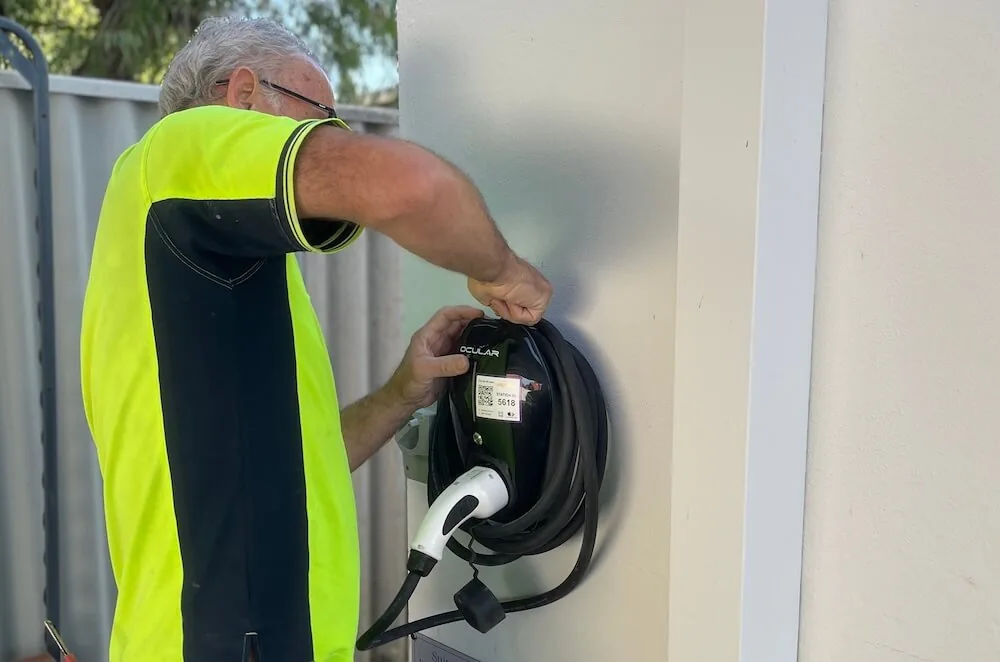
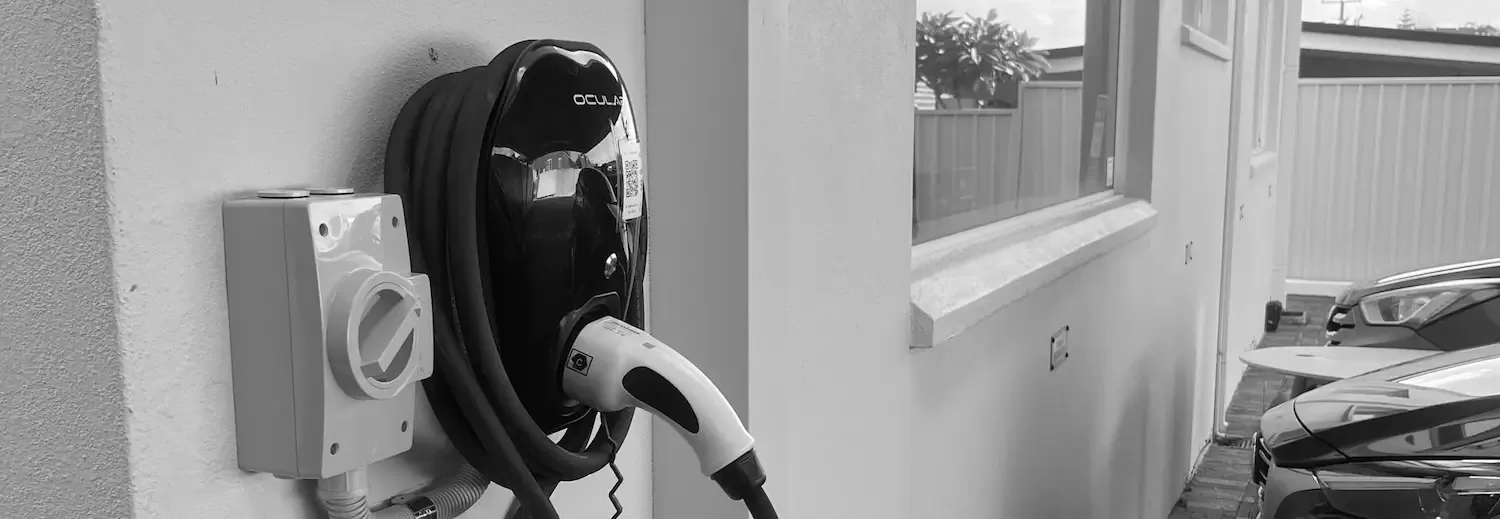
- Your three-phase charger, live and charging

Why Choose ChargingWA for a Three-Phase Charger?
We set the charger up for what your car and your supply can really use. We sort out the switchboard properly before the charger goes on the wall.
Local Support
We're based right here in WA. That means we're close by if anything goes wrong. No call centres. No ghosting.
Experienced Team
Our install team has over 7 years of experience, and we're led by Steve Randall, who's been installing EV chargers across WA for 10+ years.
Future-Proofed Installs
We only recommend products that let you grow: add another charger, connect to solar, or integrate into smart home systems later, without needing to rip everything out.
Straight Advice
We'll tell you what works, and what doesn't. No upselling. No guesswork. Just honest recommendations based on your actual setup.
Three-Phase Chargers We Install
Both of these come in single-phase and three-phase versions, and both can charge from your solar. A tethered charger has its own cable fixed to it, and a socket charger uses the cable that came with your car.

Ocular IQ Home Solar
7kW single-phase or 22kW three-phase, socket or tethered
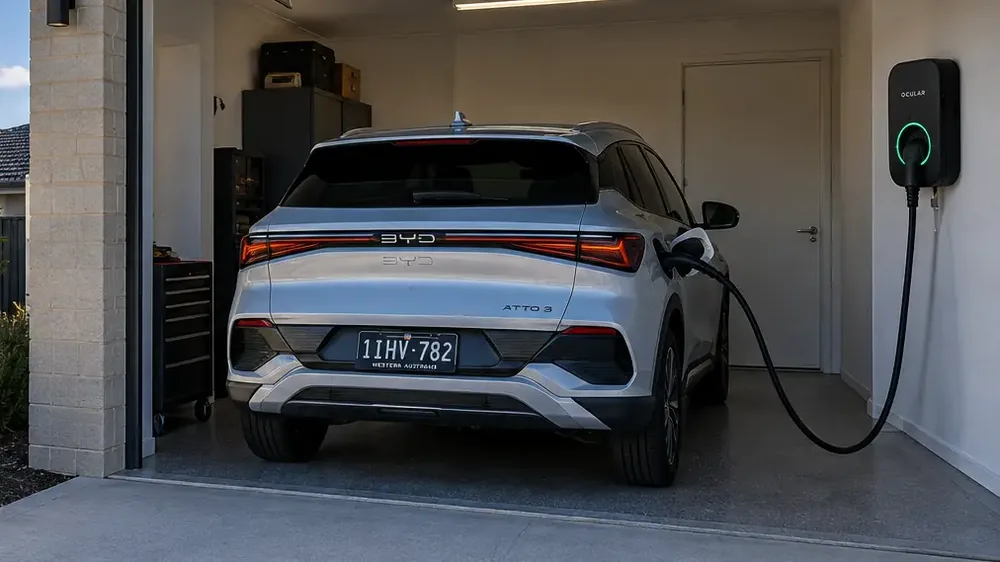
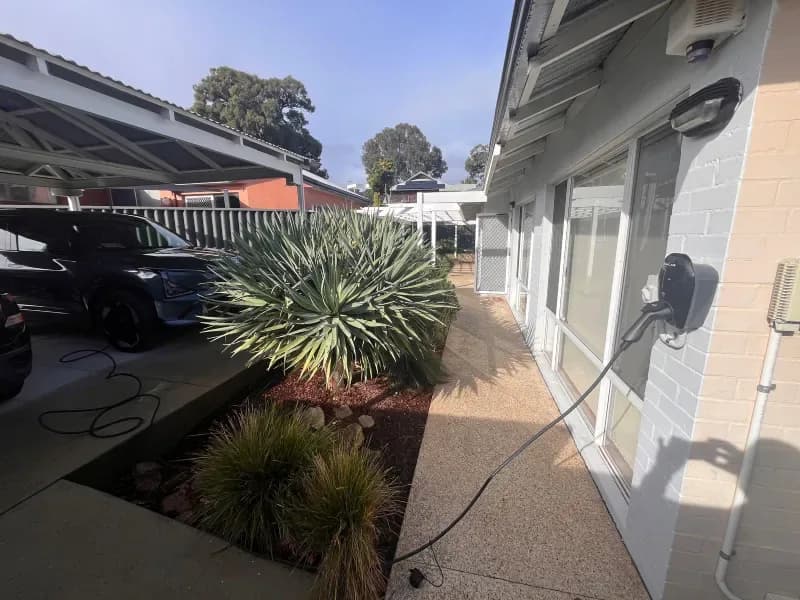
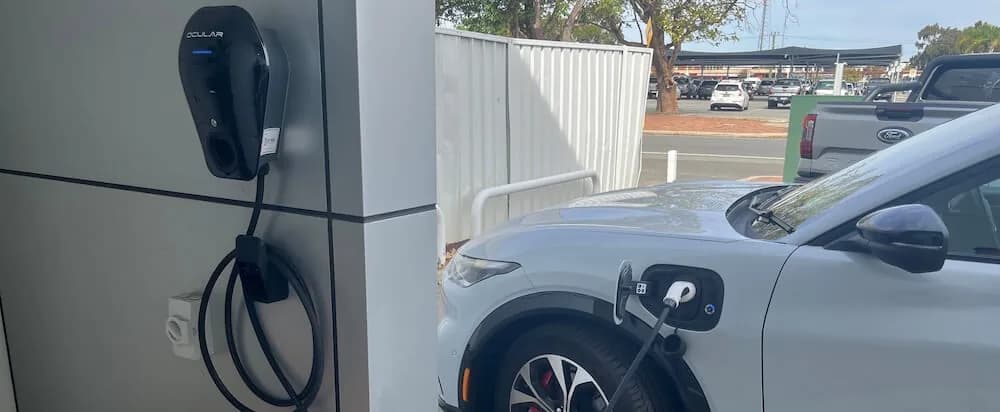
We fitted this one on three-phase power in Hamilton Hill.
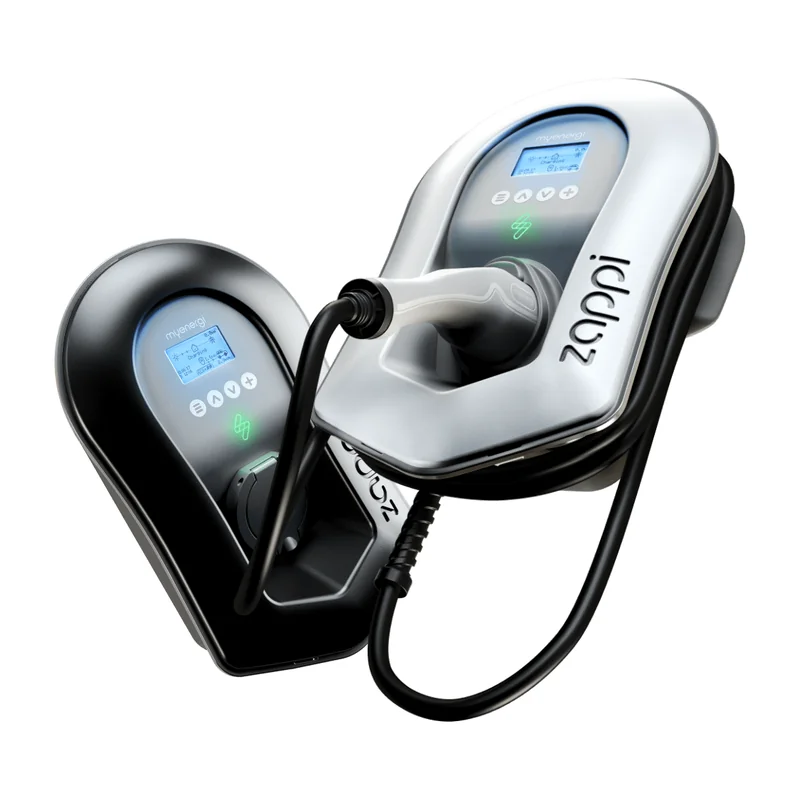
myenergi zappi
7.4kW single-phase or 22kW three-phase, tethered or socket
Home Charger Package Prices
Our three home packages are priced for 7kW single-phase chargers. We quote a three-phase charger once we've checked your supply, switchboard and car.
Entry Level Basic
Best for simple, everyday charging
From$1,669+ GST
App-Enabled Smart Charging
Best for smart home control
Priced from$1,899incl GST
Solar Charging
Best for solar households
From$2,589+ GST
Pricing is a guide. Your quote confirms the final price, including any switchboard work.
Three-Phase Charging in Hamilton Hill
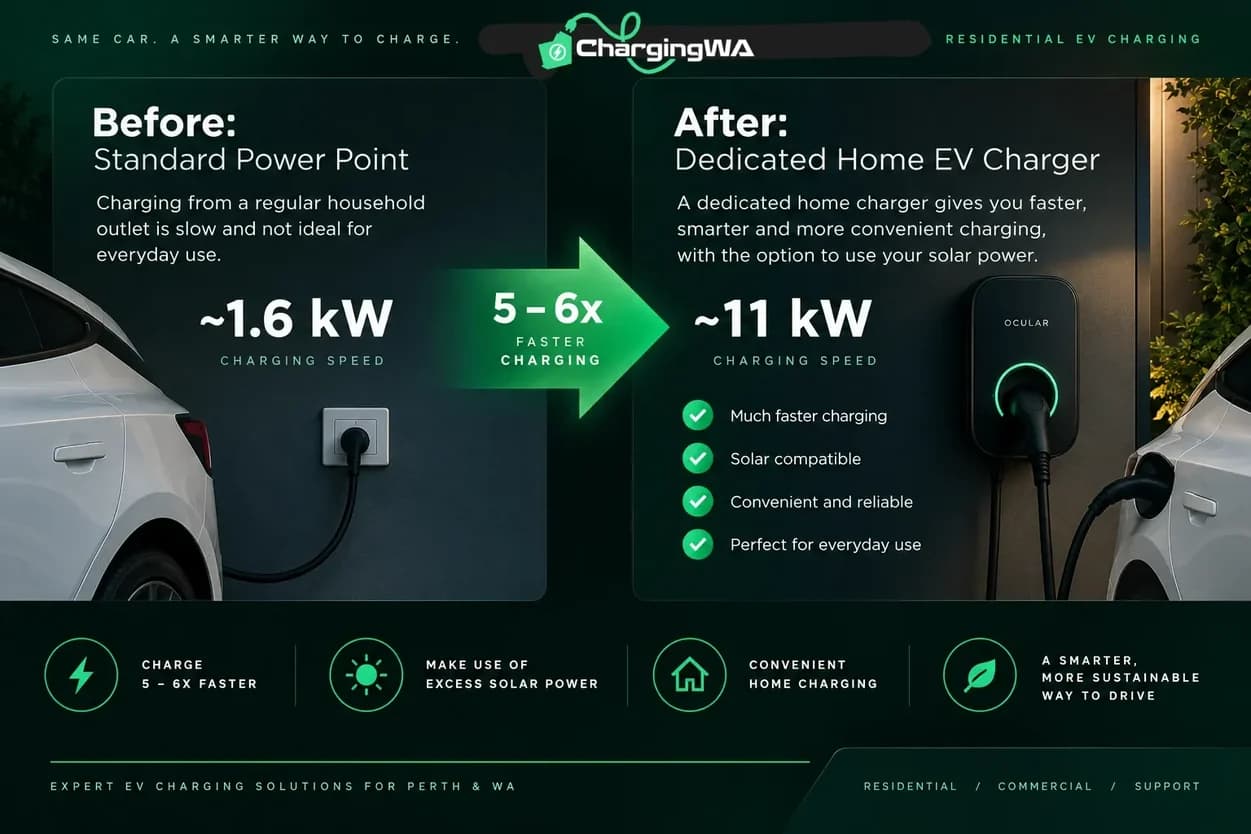
A Hamilton Hill homeowner was getting a new BYD. They wanted much faster charging than a powerpoint, with the option to use their solar.
- charger installed
- 22kW
- what the car charges at
- 11kW
- faster than the powerpoint
- About 7x
- We installed an Ocular IQ Home Solar 22kW charger and set it up for the home's three-phase supply and the car.
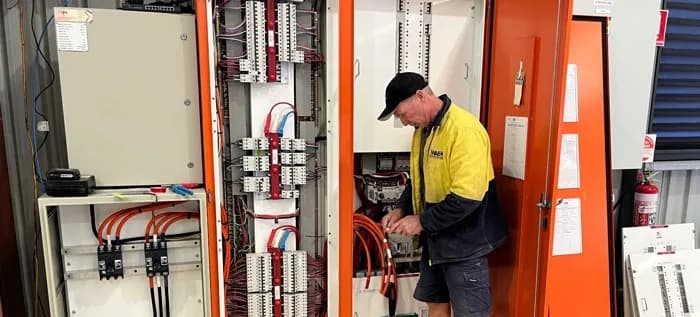
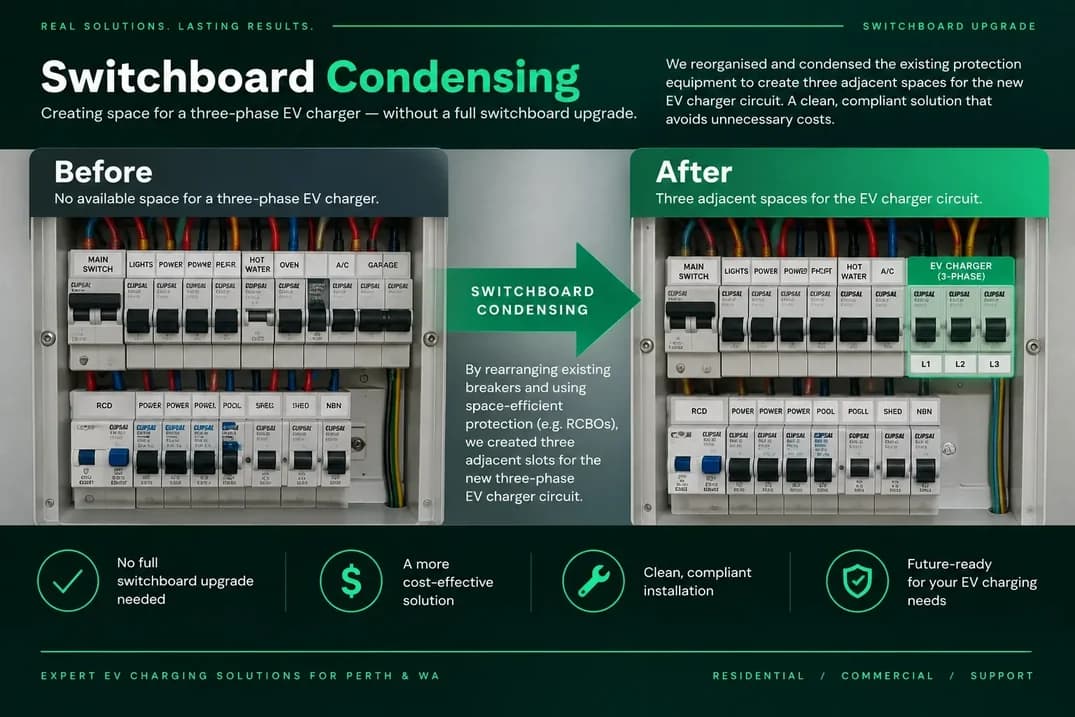
- The switchboard had no room for a three-phase circuit, so we condensed it, rearranging the breakers to free up space, instead of replacing it.
- The BYD went from about 1.6kW on a powerpoint to about 11kW.
What Three-Phase Power Means for an EV Charger
A three-phase EV charger uses all three lines of power into a three-phase home. Each line, called a phase, can carry up to 32 amps on Western Power's standard supply. An amp measures how much electricity flows at once, and a three-phase car draws about 16 amps per phase to charge at 11kW.
Western Power permits a 7kW single-phase charger on a standard connection, on single-phase and three-phase homes. Three-phase power mostly matters if your car can charge at 11kW or more.
Does your home have enough power for a 7kW charger?Western Power standard63 amps
Single-phase home
One line of power into the home. A 7kW charger draws about 32 amps, around half of what the home can draw at once.
Western Power standard32 amps on each phase
Three-phase home
Three lines, each with its own limit. A car charging at 11kW draws about 16 amps on each, which leaves about 16 amps on each for the house.
Can Your Car Use a 22kW EV Charger?
The car sets the speed. A home charger sends AC power, the kind in your powerpoints, and the car's onboard charger turns it into DC, the kind a battery stores. How much the onboard charger can take decides how fast the car charges.
The 11kW and 22kW speeds need three-phase power and a car built to use them. A car that charges on one phase uses one phase, even on a three-phase charger.
How Long 60kWh Takes
A kWh is an amount of energy, like litres in a fuel tank.
- 7kWAbout 8.6 hours
A home charger on one phase
- 11kWAbout 5.5 hours
Three-phase, about 16 amps on each phase
- 22kWAbout 2.7 hours
Only if the car can take 22kW
A 22kW Charger With an 11kW Car
In Hamilton Hill we fitted a 22kW charger, and the owner's BYD charges at about 11kW, the speed that car supports. A 22kW charger works with an 11kW car, at the car's top speed.
A Single-Phase Car on a Three-Phase Home
A car that charges at about 7kW on one phase asks for about 32 amps on that phase. That uses the whole standard limit, before the house's own appliances on that phase. So we fit load management that watches each phase and slows the car when the house needs more, or set a lower fixed speed.
Check the Room on Your Busiest Phase
Pick your supply and how your car charges, then set what the house is using. On three-phase power, set the busiest phase, because each phase has its own limit.
How Much Power Is Left for Your Car?
Pick your supply and your car, then set what the house is using. The results update as you go.
One phase can carry much more than the others. The figures assume the car shares that phase.
Room left on the busiest phase
20amps
The car would like 16 amps, about 11kW.
There is room for the car to charge at full speed, about 11kW.
This is a simple example, not a check of your home's real limits. Existing homes can differ from the standard supply, and a licensed electrician must check your supply, switchboard and circuits and set any load management limits.
What We Check at Your Assessment
Western Power requires the electrician installing a charger to make sure your supply's capacity is not exceeded. Before we quote a three-phase charger, we check these eight things.
Your supply type
We confirm whether the home is single-phase or three-phase.
Your supply rating
We check the real rating of your supply, which can differ from Western Power's standard in existing homes.
Your main switch
Western Power requires the main switch, the one that turns off the whole house, to be a circuit breaker. That is a switch that trips off by itself if too much power flows.
Your consumer mains
These cables from the street to your switchboard need to suit the extra load.
Your car
We check the AC speed your car takes and how many phases it uses, which decides between 22kW, 11kW and 7kW.
How each phase is loaded
We see which phase your air-con, oven and hot water sit on, because one busy phase can run out of room.
Room in the switchboard
We check the board has three positions side by side for the charger's breakers, and is in good condition.
Your plans
Solar, a home battery or a second EV change the set-up, so we plan for them now.
To start, send us photos of your switchboard, where you want the charger and any solar or battery, plus your car's make and model.
Send us your photosSwitchboard Work for a Three-Phase Charger
A three-phase charger needs three positions side by side in your switchboard for its circuit protection. Those are the breakers that cut the power if something goes wrong.
When the board is full, condensing it can free the room without replacing the whole switchboard. We rearrange the existing breakers and swap older pairs of circuit breakers and separate safety switches for parts that take up less space.
- If your switchboard is old or full, we tell you and put the work in the quote, so nothing changes halfway through the job.
- If your home can't take the load, we apply to Western Power for a bigger connection, or fit a smart charger that limits its draw.
- All work is done to Australian electrical standards by licensed electricians.
Three-Phase Charger FAQs
Read More About Home Power
Do I need three-phase power for an EV charger?
Usually only if your car can charge at 11kW or more. Western Power permits a 7kW single-phase charger on a standard connection, and many single-phase Perth homes can run one.
Will a 22kW charger charge my car at 22kW?
Only if your car can take 22kW. The car's onboard charger sets the speed. In Hamilton Hill we fitted a 22kW charger, and the owner's BYD charges at about 11kW, the speed that car supports.
How many amps does a three-phase EV charger use?
A car charging at about 11kW on three phases draws about 16 amps on each phase. Western Power's standard three-phase supply allows 32 amps on each phase.
Can a single-phase car charge on a three-phase home?
Yes, on one phase, at up to about 7kW. That takes about 32 amps, the whole standard limit of one phase. Load management that watches each phase keeps the car and the house under it.
Will I need a switchboard upgrade for a three-phase charger?
Sometimes, because the charger needs three positions side by side for its breakers. If your board is full, condensing it can free the room without replacing the whole switchboard. Any switchboard work goes in your quote.
Ready to Charge on Three-Phase Power?
We will look at your supply, your switchboard and your car, and tell you which charging speed makes sense. All installation is done by licensed electricians.