On this page
- Start With How Much You Drive
- Work It Out for Your Own Car
- What Happens When You Miss a Night
- A Jerry Can or a Petrol Bowser at Home
- What a Wallbox Gives You
- Slow Charging Keeps You Thinking About the Battery
- You Might Not Need a Wallbox Yet
- When a Wallbox Starts to Make Sense
- Try the Portable Charger for 2 to 4 Weeks
- Get a Quote Even if You Are Not Ready
- The Bottom Line
- Common Questions
Many new EV owners ask whether they need a dedicated home EV charger, often called a wallbox, or whether the portable charging cable that came with the car will do.
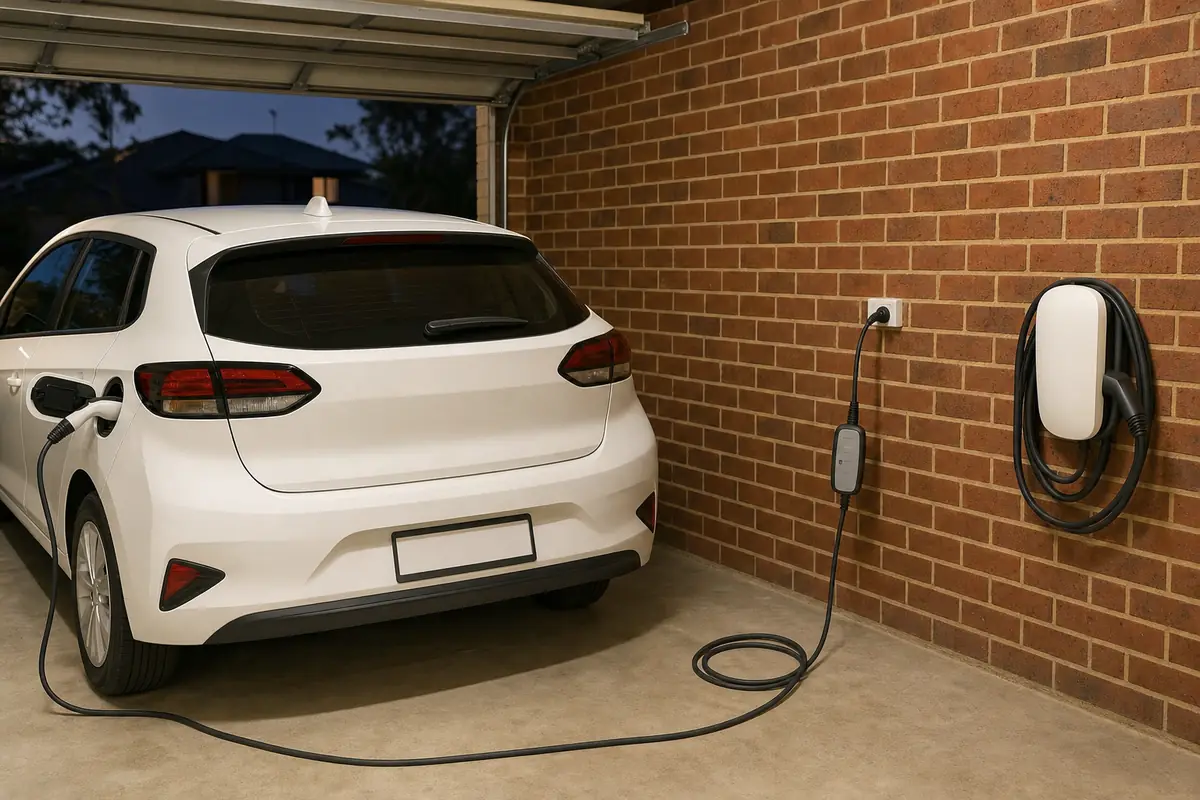
You can charge an EV from a suitable standard powerpoint with a portable charging cable, and for some drivers that may be all they ever need. Whether it is enough for you depends on how you use your car.
Start With How Much You Drive
First, work out how much energy your normal driving uses. You need two numbers: the kilometres you drive in a week, and the energy your car uses per 100 km in kWh (kilowatt-hours), the unit on your power bill. Your trip screen or app shows it, though some cars show km per kWh instead.
Multiply the two and divide by 100. If you drive 300 km a week and the car uses 18 kWh per 100 km, it uses about 54 kWh of battery energy a week.
A portable EV charger, also called a granny charger or trickle charger, delivers about 1.8 to 2.4kW from a standard powerpoint, depending on the cable. A kW, or kilowatt, is how fast it charges: 2kW for one hour puts in 2 kWh.
At 2kW, left plugged in for 10 hours overnight, it adds about 20 kWh in theory, and a little less because some energy is lost as heat on the way into the battery. In this example, plugging in every second night covers the week's driving.
The real figure depends on the cable, the powerpoint, the wiring and the car. A licensed electrician should check that the powerpoint and circuit are safe to run at full load for hours every night.
Work It Out for Your Own Car
Enter your own week below. The calculator works out how much energy your driving uses, how many nights of portable charging that takes, how long each charger takes to put back a day of driving, and what happens when you miss a night.
Do I Actually Need a Home EV Charger?
Move the sliders to match your week. The results update as you go.
Your car's trip screen or app shows it. If it shows km per kWh instead, divide 100 by that number.
The part of the battery the car lets you use, in kWh. It is listed in your car's specs or manual.
Portable charger power
Most portable cables on a standard powerpoint deliver about 1.8 to 2.4kW.
Your driving uses about
54kWh a week
A night on the portable charger adds about 18 kWh, roughly 30% of your battery.
You would need about 3 nights of portable charging a week to keep up.
Time to put back one average day of driving
- Portable charger4 hr 15 min
- 7kW home charger1 hr 15 min
If you miss a night, then drive twice your usual distance the next day
On the portable charger, it takes about 2 nights of plugging in to get back to where you were. On a 7kW home charger, it takes about 1 night.
A portable charger is likely enough
The portable charger keeps up with your driving, with nights to spare. Try it for a few weeks before spending anything.
Get a home charger quoteThis is an estimate to help you decide, not electrical advice. It takes off 10% for charging losses. Your car, cable, powerpoint and wiring all change the real result, and a licensed electrician should check that a powerpoint is safe for charging every night.
What Happens When You Miss a Night
Portable charging can work well while your routine stays the same. It gets harder when something interrupts it.
Say you forget to plug in on Friday, an unplanned long drive on Saturday gets you home with 30 to 40% left, and Sunday is busy too. The portable charger is still adding energy, but you may be using it almost as fast as it goes back in. It can take several nights to make up the gap.
Falling behind. When missed nights or long trips mean you drive more than the portable charger puts back, you have to play catch-up. That is when charging at home can start to feel like a job you have to manage.
A Jerry Can or a Petrol Bowser at Home
A portable charger is like a jerry can. Picture tipping 5 to 7 litres into your petrol tank from a jerry can every night, instead of filling up once a week. If you keep it up, the tank stays topped up, but miss a few nights or take a long trip and you may have to think about catching up.
A wallbox is like a petrol bowser in your garage. You still plug the car in, but when you need a lot of energy back, there is far more charging power on hand. You may also be able to set it to charge when electricity is cheaper.
What a Wallbox Gives You
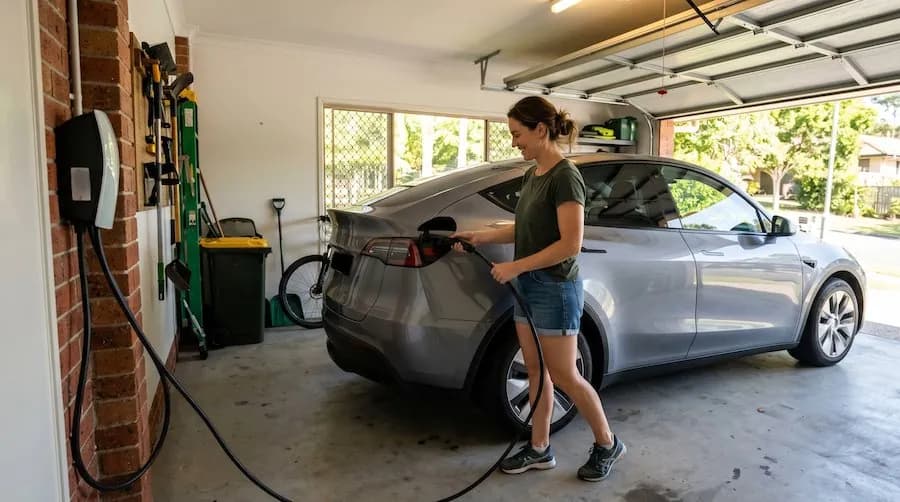
You don't need a wallbox to charge most cars. People buy one for the convenience and the extra charging power. With a wallbox you can:
- Put a lot more of the battery back in one night.
- Stop checking the battery percentage and working out whether tonight's charge will be enough.
- Cover a forgotten night or a long trip you had not planned.
- Rely less on public fast chargers when home charging falls behind.
- Share one car between several drivers more easily.
- Use smart features such as scheduled charging, charging from your solar panels and load management, which shares your home's power between the car and everything else.
A wallbox is a one-off cost. Once it is installed, the charging capacity is there whenever you need it.
Slow Charging Keeps You Thinking About the Battery
Range anxiety usually means the fear of running out of battery on the road. Slow charging at home can cause a different kind: always thinking about tomorrow's range.
Did I plug it in, and what percentage is it on? How far am I driving tomorrow, and did my partner use the car today? Will tonight put enough back, or do I need to find a fast charger?
A faster home charger still has to be plugged in, but it lets you recover quickly when plans change.
You Might Not Need a Wallbox Yet
We don't think every EV owner should install a wallbox on day one.
If you drive around 100 to 150 km a week, the car is home most nights, you don't mind plugging in, and you aren't fussed about solar charging, apps or cheaper night rates, there may be no hurry at all.
Try it first. Use the portable charger and see how it fits your life. If it keeps up with your driving and you rarely think about charging, you may not need anything else.
When a Wallbox Starts to Make Sense
- You are driving more kilometres each week.
- You often get home with a low battery.
- You sometimes need to put a lot of charge back overnight.
- You use public fast chargers because the portable charger can't keep up.
- You forget to plug in and then spend days catching up.
- More than one person drives the EV and nobody is sure who plugs it in.
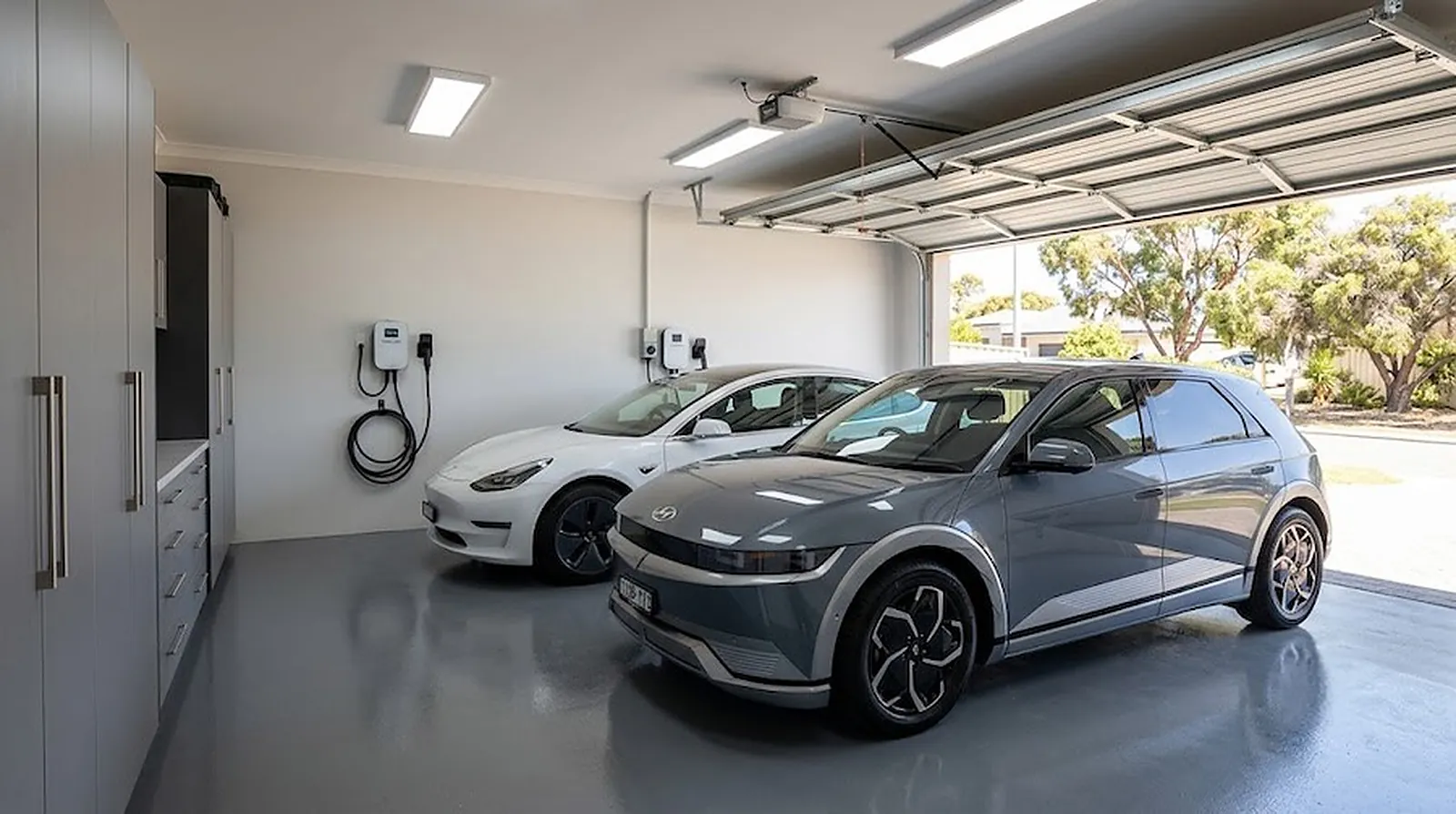
- A second EV is joining the household.
- You want to charge on cheaper time-of-use electricity, where the price changes with the time of day.
- You want the car to charge from your solar panels.
- You want charging to be something you rarely think about.
Try the Portable Charger for 2 to 4 Weeks
If you are not sure, there is no need to guess. Live with the car and the portable charger for two to four weeks, then ask yourself:
- Did it put back the kilometres I drove without trouble?
- How many nights a week did I have to plug in?
- Did I keep checking the battery percentage?
- Did I fall behind after missing one or two nights?
- Did a long drive I had not planned leave me catching up?
- Did I need a public charger because home charging couldn't keep up?
- If other people drive the car, did they plug it in every time?
- Did I plan tomorrow around today's battery percentage?
- Did I keep wishing I could charge faster?
If most of those never came up, keep using the portable charger. If several became regular frustrations, you have seen for yourself where a wallbox earns its place.
Get a Quote Even if You Are Not Ready
While you trial the portable charger, it is still worth getting a quote for a home EV charger. You will know the one-off cost without having to go ahead, and you can weigh it against faster charging and less time spent checking the battery. Get a home EV charger installation quote from our Perth team.
The Bottom Line
Can you use a portable charger? Yes.
Do you need a wallbox? Not always.
Why do people install one anyway? It makes owning an EV simpler. There is far more charging power at home, and much less time spent thinking about range, charging times and catching up.
Common Questions
Can I charge my EV from a normal powerpoint?
Yes, with a portable charging cable made for it, as long as the powerpoint and circuit are safe to run at full load for hours. Have a licensed electrician check them before you rely on it every night.
How fast does a portable EV charger charge?
A 2kW portable charger draws 2 kWh from the powerpoint each hour, and a little is lost along the way, so allow about 1.8 kWh into the battery. In a car that uses 18 kWh per 100 km, that is about 10 km of driving for every hour on charge.
How much faster is a 7kW home charger?
A 7kW charger delivers three and a half times the power of a 2kW portable cable, so each hour on charge puts back three and a half times as much, as long as your car can take 7kW.
Should I get a quote before I decide?
Yes. A quote costs you nothing to ask for and tells you the one-off price of a wallbox, so you can compare it with what the portable charger is costing you in time and attention.